sTRATEGIC PROJECTS
Across these projects, you can see BrandCom’s three interrelated dimensions at work:
Create — meaning and strategic intent
Manage — systems, structure, and organisational coherence
Market — expression and commercial reality
Strategic Projects are engagements where brand is treated as the organising system.
Approached this way, brand shapes how an organisation is structured, how decisions are made, how systems operate, and how the work is brought to market.
In these projects, brand strategy drives business strategy, and the implications are worked through in practice.
As clients began to see the benefits of this approach and what it could unlock, the scope of the work expanded quickly.
We found ourselves operating in unfamiliar territory, often in areas no one had navigated before.
The work demanded ongoing learning, clear judgement, and a willingness to stay open as each project unfolded.
These engagements are typically complex and consequential, involving multiple moving parts and sustained involvement over time.
The projects shown here reflect moments where this approach mattered — shaping not just expression, but how organisations and ventures were built, positioned, and made to work in the real world.
Motatapu — The ultimate brand experience
What we were selling was the thrill of finishing
“I remember after the first event going into an Arrowtown bar and having two nurses from Invercargill telling me of all the running events they had done, the thrill of running down the finishing line of Motatapu, was the greatest experience of their lifetime.
It was the very moment I knew we had succeeded in creating something really special, and our job going forward was to never lose sight of that,” Geoff Matthews
From the start, we were clear about what we wanted to create; one of New Zealand’s most Iconic Events. Right off the bat. We didn’t want to wait 20 years to achieve this, as the other ‘iconic’ New Zealand events had taken to earn that right.
We wanted to become New Zealand largest off-road event in our first year and cement ourselves as a ‘must-do’ event, and a rite of passage. We even named the organising company Iconic Adventures.
Above all, we had a resolute brand strategy to back up that confidence.
We were acutely aware that the athlete experience would become the brand experience, and the brand experience would become the product that would sustain the event in the long-term. We set out to create something people would want to return to year after year, and to talk about long after they’d finished. That clarity shaped every decision from day one.
While the isolated landscape and the point-to-point historic route from Wanaka to Queenstown was certainly eye-candy, we committed ourselves to providing the athlete with the thrill of finishing a big-time event on a modest amount of training and a modest entry fee.
After hours in the high country, athletes were brought back into Arrowtown and through a corridor of people, noise, energy, and affirmation. The act of finishing felt visible, shared, and deeply earned.
That moment wasn’t incidental. It was the brand being the organising system.
In year one the event became New Zealand largest Mountain bike event, its largest off-road running marathon, and its third largest marathon overall.
Today after 25 years, Motatapu is still the largest off-road event in New Zealand.

More than $30 million raised on the back of this work
Mt Cook Alpine Salmon - Strategy, Capital, Execution
This project is an example of brand being used as the organising system for an entire venture.
BrandCom’s involvement began at the formation of the company itself — defining the strategy, shaping the commercial logic, and building the narrative framework that would guide decision-making, capital raising, and execution. The Information Memorandum shown here was not a marketing artefact. It was the primary strategic document around which the business was organised.
The Information Memorandum was deliberately constructed so that the story could be understood quickly and intuitively. The photography carried much of the narrative weight, and the captions were written to do real work. Taken together, the images and captions alone conveyed the core strategy, the product logic, the market positioning, and the long-term intent of the business.
This approach made the document unusually accessible. Investors could understand the opportunity without needing to read it cover to cover, and the key messages were clear even at a glance. At the time, the Information Memorandum was widely regarded as one of the strongest produced in New Zealand, precisely because of the way strategy, story, and visual structure were integrated.
Geoff Matthews became CEO of the company and led it through its growth phase, taking Mt Cook Alpine Salmon to Deloitte Fast 50 status and to multiple New Zealand food awards.
This project illustrates how BrandCom approaches strategic work. When brand is treated as the organising system, strategy, capital, operations, and market execution align naturally. Storytelling becomes a practical tool — not just for communication, but for clarity, confidence, and scale.
Click on the image to view the PDF of the document
TaxRefunds.co.nz — the first automated tax refund system
Scale, impact, and outcome
The results speak for themselves.
1 million tax refunds processed in the first seven months
At peak we on-boarding 20,000 new customers per day
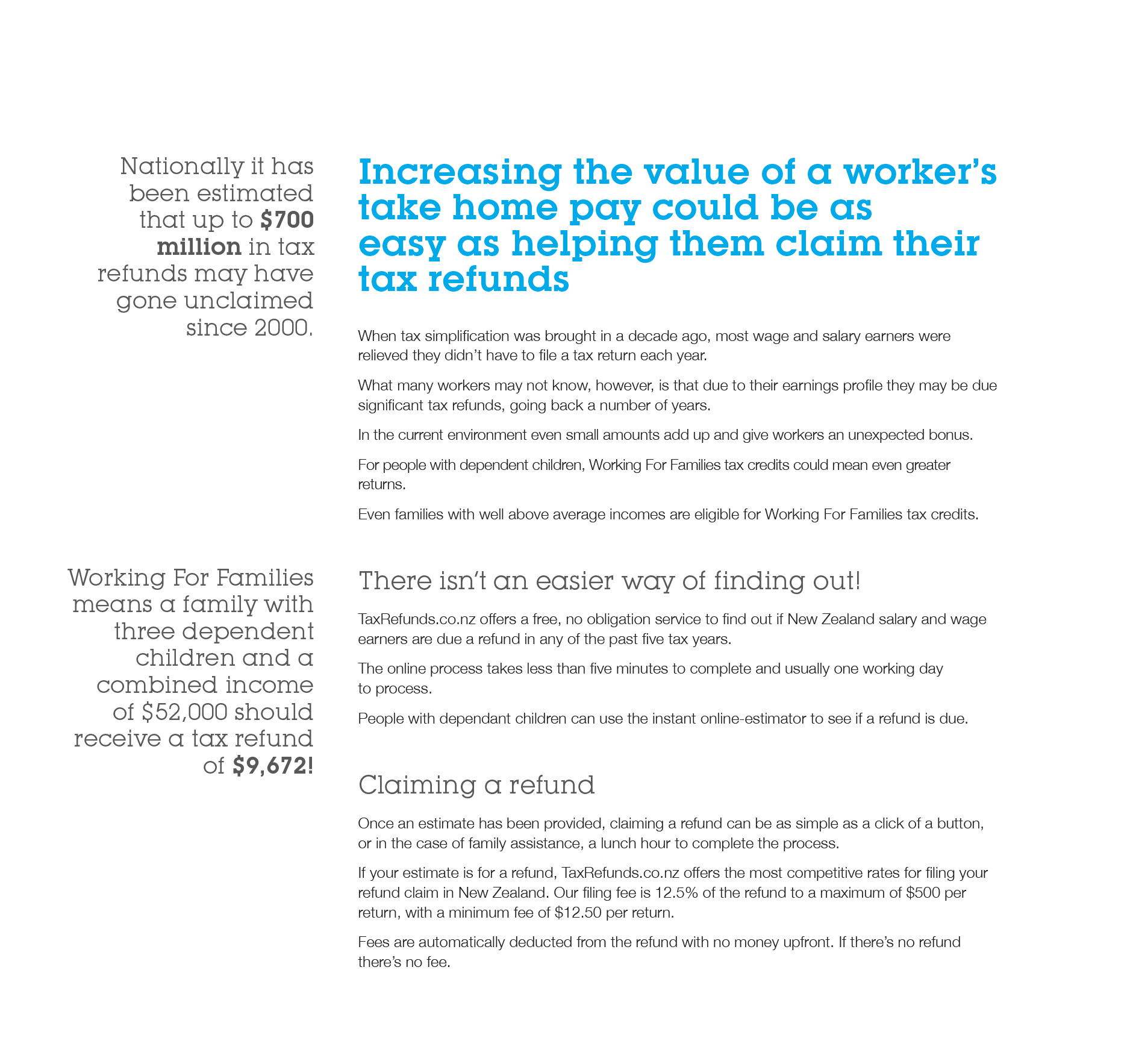
Ultimately, more than $150 million would be returned to New Zealanders
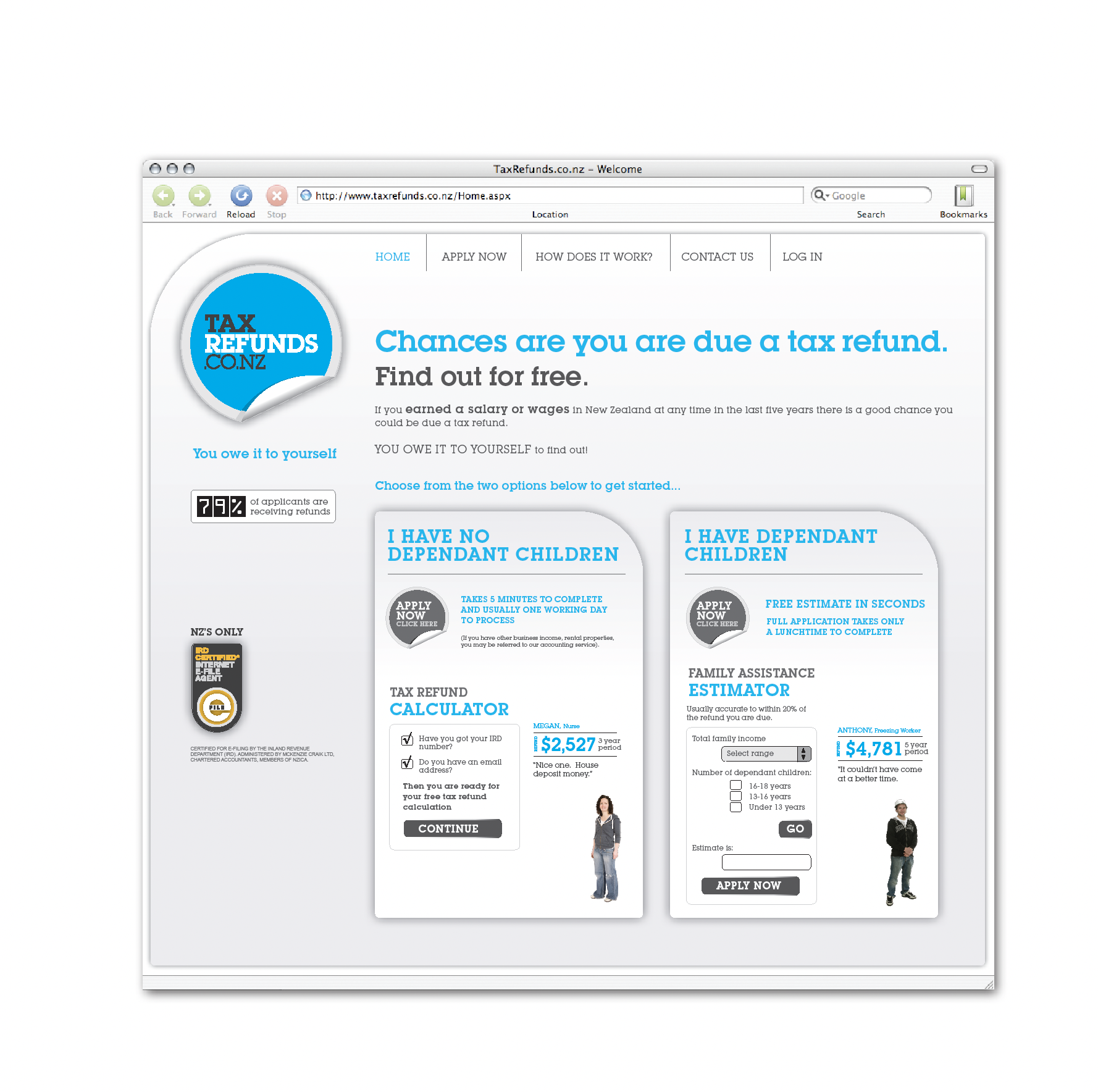
TaxRefunds.co.nz was the first fully automated tax refund system in New Zealand. Others followed later, but this was the first time the process had been conceived, designed, and executed end-to-end.
1. Conception, structure, and build
The company began in a café in Queenstown, during a conversation with a client’s accountant.
As the manual tax refund process was described; multiple systems, repeated logins, hand-offs, and delays, the structural problem became clear. In that same conversation, the systems were drawn, and alongside them, a way of integrating and automating what had always been manual.
From there, BrandCom;
formed the company
raised the capital
designed the technical and commercial architecture
built the integrating system and the computer systems
and took the business through to launch.
The core invention was an integrating system — a layer that interfaced sequentially with three independent computer systems, collected and validated data, executed the process, and returned the result. That system reduced a process that took around 22 minutes for a skilled Inland Revenue operator to approximately five seconds.
2. Earning trust at scale
Building the system was one challenge. Getting people to trust it was another.
From the outset, we understood that marketing TaxRefunds.co.nz would require judgement and care. In the original business plan, we allocated $150,000 to build the system and $500,000 to market it — recognising that credibility would be central to success.
We were asking people to provide their IRD number, address, and bank account details at a time when online transactions were still new territory for many. Establishing confidence in the service was essential.
At its core, the story was about fairness.
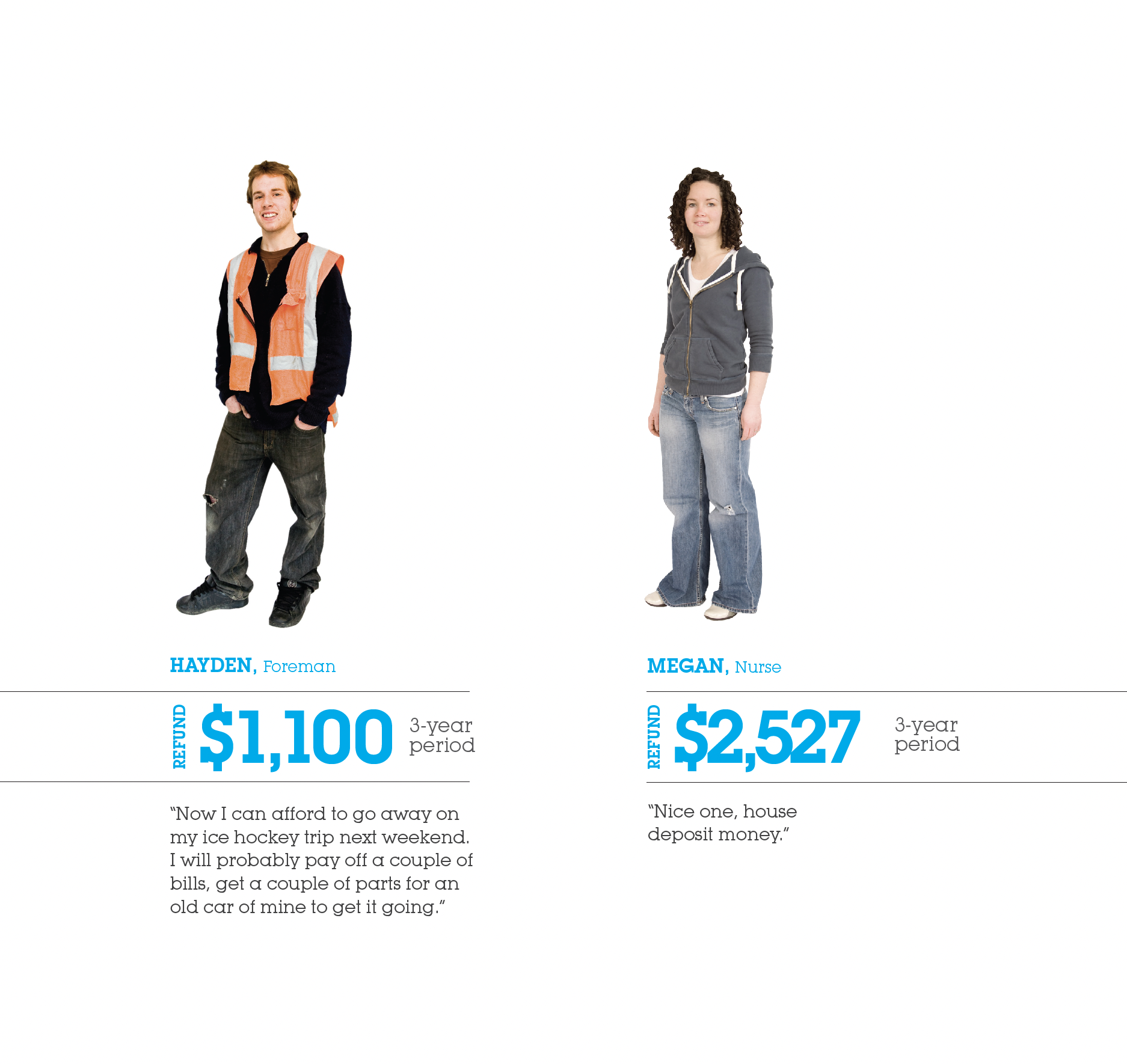
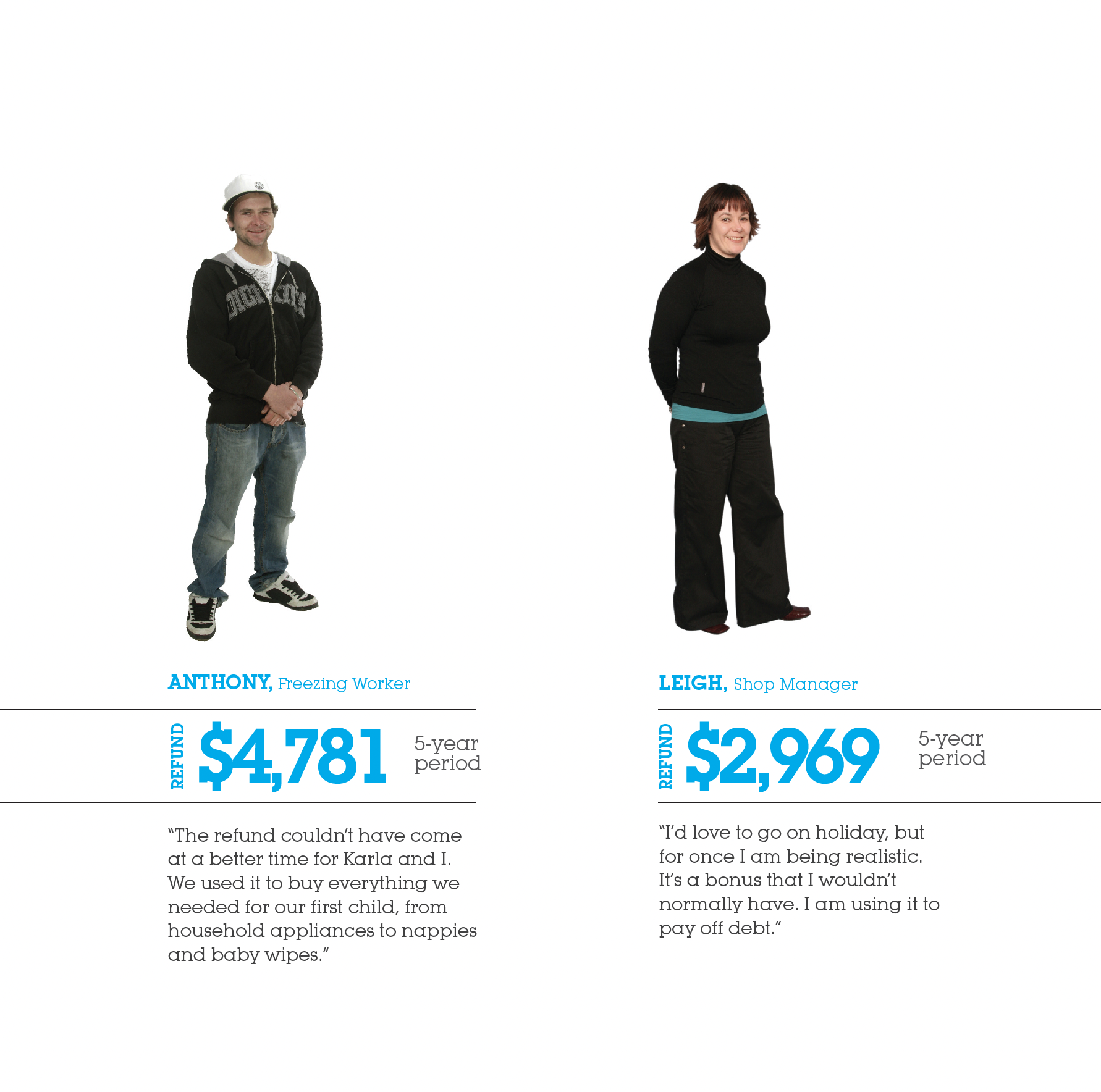
This was money that already belonged to people. Employers had paid it on their behalf. Inland Revenue had taken too much. For employees, it felt like an extra pay cheque. For employers, it was simply correcting an imbalance in the system.
We brought that story to life by doing something highly unusual; putting the head of the Employers Federation and the head of a major trade union side by side in a television campaign, both encouraging people to claim their refund.
When employers and unions were saying the same thing — this is your money — confidence followed quickly. That moment marked the shift from interest to action, and the business scaled rapidly from there.
TaxRefunds.co.nz followed Motatapu as BrandCom’s second successive business successfully taken from inception to full commercialisation.
In both cases, the brand was treated as the organising structure through which business strategy and execution were shaped.