
oUR STORY
The truth of people’s perceptions
The brand is the integrating factor
Brand strategy should drive business strategy
A way of seeing the world
Before BrandCom was formed, Geoff Matthews spent more than a decade inside the Office of the Prime Minister of New Zealand. Working at the centre of national decision-making and running three successful election campaigns shaped a defining understanding; that people's perceptions were formed from not what was being said, but how messages were being received. Viewpoint mattered.
After leaving government in late 1997, Geoff returned to Victoria University of Wellington to undertake postgraduate study in marketing, where he became naturally drawn to branding and consumer behaviour. At the time, branding was still emerging as a field and was for the most part treated as a subset of marketing.
Inquisitiveness set in, Geoff authored the first academic paper on brand architecture to be published globally (Bradford University, 1999). He also started to question the organising logic of the discipline. If brand was fundamentally about meaning, perception, trust, and coherence, then treating it as an output of marketing felt directionally wrong.
Geoff’s three takeaways from this period that still sit with him today are:
Marketing should be a subset of branding
The brand is the only element in the organisation that provides value to all four of the organisation’s stakeholder groups and therefore should be the integrating factor around which the organisation should be built
Brand strategy should drive business strategy.
His studies of these principles inevitably led to him becoming a regular guest lecturer in Branding, at MBA level.
Alongside academic work, Geoff held senior roles within two respected agencies: Sweeney Vesty, one of New Zealand’s leading corporate communications firms, and advertising giant McCann Erickson. The McCann Brand Footprint methodology, which treated brand as a structured system, still remains an enduring influence.
The brand is the organising system through which coherent strategy, trust and value are built
The writing on the wall
In 2000, Geoff was commissioned to write a strategy paper for the Chief Executive of a major telecommunications company, examining what the emerging Internet and World Wide Web would mean for the future of the workplace. At the time, digital infrastructure in New Zealand remained limited, but the signs of what was on the horizon were becoming visible.
As connectivity increased, skilled professionals would no longer be constrained by location and would have a larger potential market for their specific skillsets, allowing them to specialise.
Geoff was left staring at his own writing on the wall. The world was about to change, and he wanted to be part of it.
In 2001, he formed BrandCom with a central belief: that brand was not an output of marketing, but the organising system through which coherent strategy, trust, and value are built in an increasingly complex world.
He would write on the back of his business card:
Your brand is a living, evolving being … and your only guarantee of future earnings.
The idea deliberately held two truths at once. Brands operate as living systems, shaped by perception, meaning, and behaviour. At the same time, brands live inside commercial reality, they must create value or cease to exist.
BrandCom’s first major project was a national conservation initiative
The beginning mattered; brand could operate as a mechanism for structural change
Taking care of business
BrandCom’s first major project would not be a logo, a tagline, or rebrand; it would be a national conservation initiative, a strategy to restore an ancient forest, rebuild an ecosystem, and return endangered bird species to the wild.
In the final year of his time in Parliament in 1997, Geoff worked closely with the Prime Minister and Stephen King, one of New Zealand’s leading conservationists, on a mission to halt the logging of indigenous forests on the West Coast.
During the final hours of Jim Bolger’s Prime Ministership, and as 10 years of life in Parliament ended abruptly, Stephen King called Geoff and said to him, “It is your destiny to restore a native forest.”
Geoff recalls it as one of the strangest conversations he ever had, but very ‘Stephen King’. Four years later in 2001, shortly after BrandCom was established, the Department of Conservation and the Pūkaha/Mount Bruce Restoration Trust approached Geoff to develop a strategy to raise funds for pest control and regeneration of the Pūkaha/Mount Bruce Forest.
BrandCom conceived and delivered several fundraising initiatives but central to the whole premise was the ability to use funds raised from the public for pest control on crown land, which had never been done before and required Ministerial permission.
The jewel in the crown of these initiatives was undoubtedly Pūkaha – Songs from the Forest: a fundraising and awareness project built around a CD of native bird song. The work involved developing the narrative architecture, writing scripts, assembling hundreds of historical field recordings, commissioning design and production, and creating the materials that allowed the project to attract community, philanthropic, and government support.
The campaign captured the public’s imagination. All the funds required were raised and the CD went on to win a Conservation Award, and the guest speaker at the launch … Stephen King.
This beginning mattered. It set the tone for what BrandCom would become: A practice unconcerned with industry boundaries, comfortable moving between policy, ecosystems, commercial strategy, and creative production. Grounded in the belief that branding could operate as a mechanism for structural change, it also established a willingness to challenge prevailing worldviews.
The practice was able to assemble a team with uncommon intellectual depth for a branding consultancy
Zig when others Zag
Queenstown was seen as an international settlement disguised as a small town, globally connected, entrepreneurial, and unconstrained by capital-city assumptions about how and where serious work should be done. Success there could not be inherited. It had to be created; it had to be earned.
The practice was able to assemble a team with uncommon intellectual depth for a branding consultancy.
Carryn Colton entered with a Bachelor of Commerce majoring in Marketing and a Bachelor of Arts majoring in Psychology from the University of Otago. Her combination of behavioural insight and analytical discipline made her a natural fit for BrandCom’s intellectually rigorous approach to branding. She worked across every major project that followed and became a director in 2009.
Gemma Boyle joined as a graduate, bringing a Bachelor of Commerce and an instinctive grasp of operational discipline. Her capability would later be demonstrated at scale when she managed the Motatapu event, which she still does today, now in its 25th year.
Tracey Le Fay (Neil) brought a Bachelor of Commerce (Honours) in Information Systems. Tracey possessed a rare ability to walk into an organisation, see its internal architecture almost immediately, and rebuild it so the business could deliver on their brand promises.
Finally, Lisandra Macaés, who held an MBA from a leading Paris business school, brought global thinking, analytical strength, and a broader commercial lens, reinforcing BrandCom’s ability to operate comfortably beyond New Zealand’s borders.
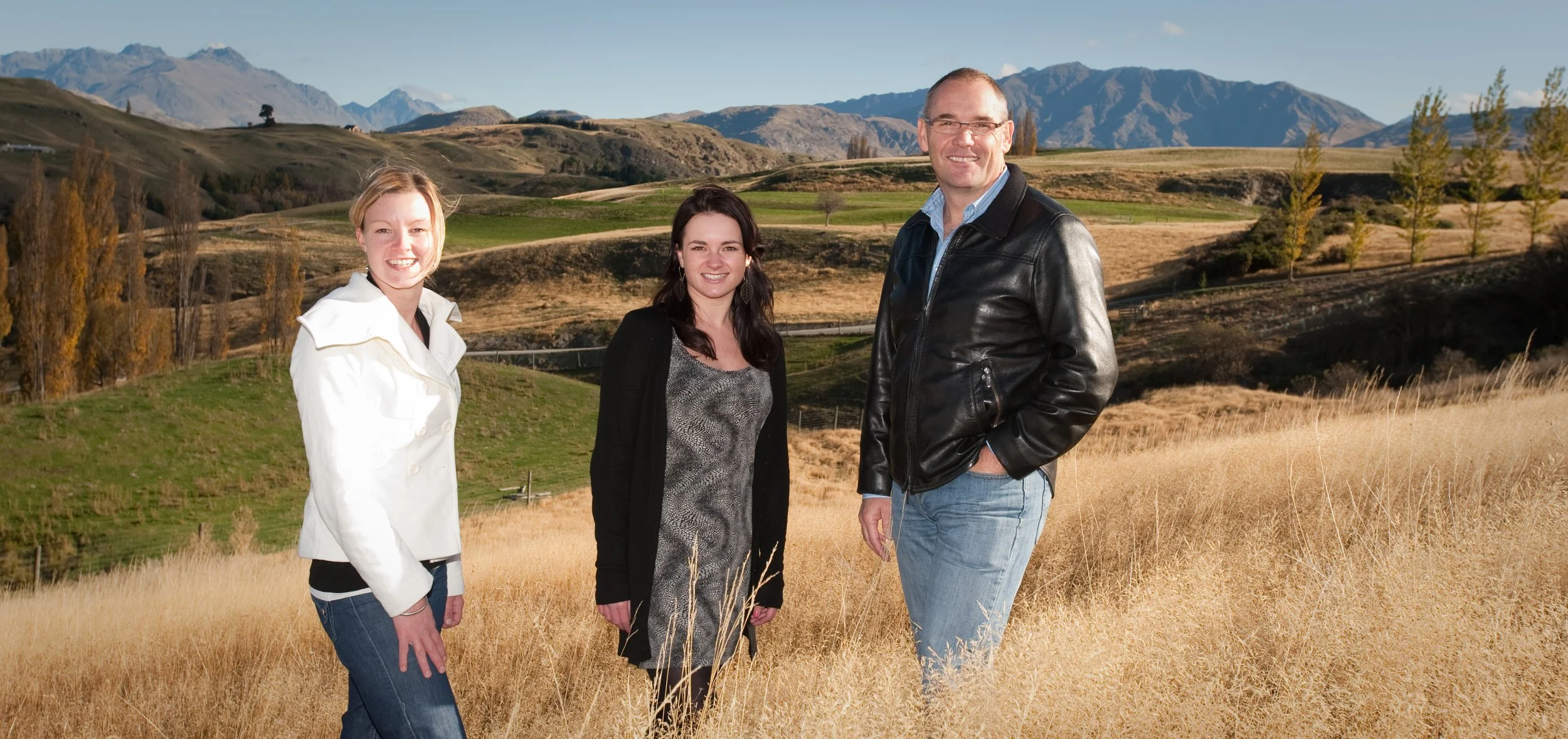
By 2008 Rosie Turner BCA (centre) had joined the BrandCom team, pictured here with Carryn Colton (left) and Geoff Matthews (right).
BrandCom always treated strategy as a creative act
Creative Discipline
BrandCom always treated strategy as a creative act. Clear thinking came first, not to constrain design, but to create the conditions in which great design could emerge. Strong briefs provided direction, intent, and boundaries, giving designers both clarity and freedom.
That discipline shaped long-standing creative partnerships. BrandCom began working with designer Luke Johnston in 2003. His talent was immediately evident, and the relationship was built on trust: the confidence that rigorous strategy, clearly articulated, would be translated into equally rigorous creative outcomes. Luke designed the BrandCom logo, an endangered mountain daisy of New Zealand’s Southern Alps, which remains in use today.
Luke later founded his own design studio, Brandaid, with BrandCom as his first client. What followed was a sustained collaboration across BrandCom’s most complex commercialisation projects, and one that continues today.
As the practice expanded, Jos Browning joined as senior designer, bringing depth and craft. Like Luke, Jos worked within the same disciplined creative frameworks and became a long-term collaborator. That continuity remains evident today, including all the design elements of SIM-PAC Live.
Intellectual firepower allowed BrandCom to expand across multiple dimensions
The Matrix, Rewritten (2005–2015)
The intellectual firepower assembled allowed BrandCom to expand across multiple dimensions simultaneously; deepening existing work, developing new capabilities, entering new markets, and creating entirely new businesses.
In classic Ansoff matrix terms, this form of multidirectional expansion is widely regarded as high-risk, particularly when breadth outpaces capability.
BrandCom inverted that logic. Expansion was driven by an increasing ability to take on more complex problems and underpinned a decade of sustained value creation.
This is reflected in BrandCom’s recognition as a Deloitte Fast 50 company.
BrandCom began to see the rules differently

One million tax refunds in the first seven months
Capability Bending Constraints
During these years, BrandCom began to see the rules differently. Capability determined what form the work could take. Some engagements remained advisory. Others developed into long-term partnerships. A number evolved into entirely new businesses. Big complex projects were run concurrently with smaller client work.
BrandCom also displayed breadth by working across a wide spectrum of the economy; food and FMCG, agriculture and primary industries, professional services, sport and sports nutrition, heavy industry, and regional and place-based branding.
When reflecting on this period, Geoff gives a few examples of seminal projects that challenged the status quo but also talks of smaller ones that reflected the creative team environment inside BrandCom and still make him smile.
One such example began with a conversation in a café in 2007. A client and his accountant described a belief that significant sums of unclaimed tax refunds sat within the New Zealand tax system. Geoff asked how a single refund was processed and how many systems were involved.
On a piece of paper, Geoff sketched what a pipeline would look like if those systems were connected and automated. In theory, you could put in an IRD number in at the top, and at the bottom, money would come out. Across the top of the page, he wrote moneyfornothing.com.
That sketch became TaxRefunds.co.nz, and from the outset Geoff knew it would change the New Zealand tax system. BrandCom raised capital, built the system internally, and took the business to market.
In its first seven months, more than one million tax refunds were processed, and over time the platform returned more than $150 million to New Zealand taxpayers. BrandCom’s marketing campaigns drove 1.5 million individual users to the TaxRefunds.co.nz platform in a single month, and at peak they were adding more than 20,000 new customers a day.
The automated system built from the original sketch was the first non-government platform ever to connect directly with the IRD mainframe. It could process a tax refund in under five seconds. A skilled IRD operator, using the same IRD systems, would take around 22 minutes.
As early as 2007, Geoff met directly with the Minister of Revenue to demonstrate the system. It was already clear that once the public experienced this level of speed and simplicity, the government would have to automate its own processes. It would take another twelve years for that change to be implemented.
The impact of official approval would be seismic and global
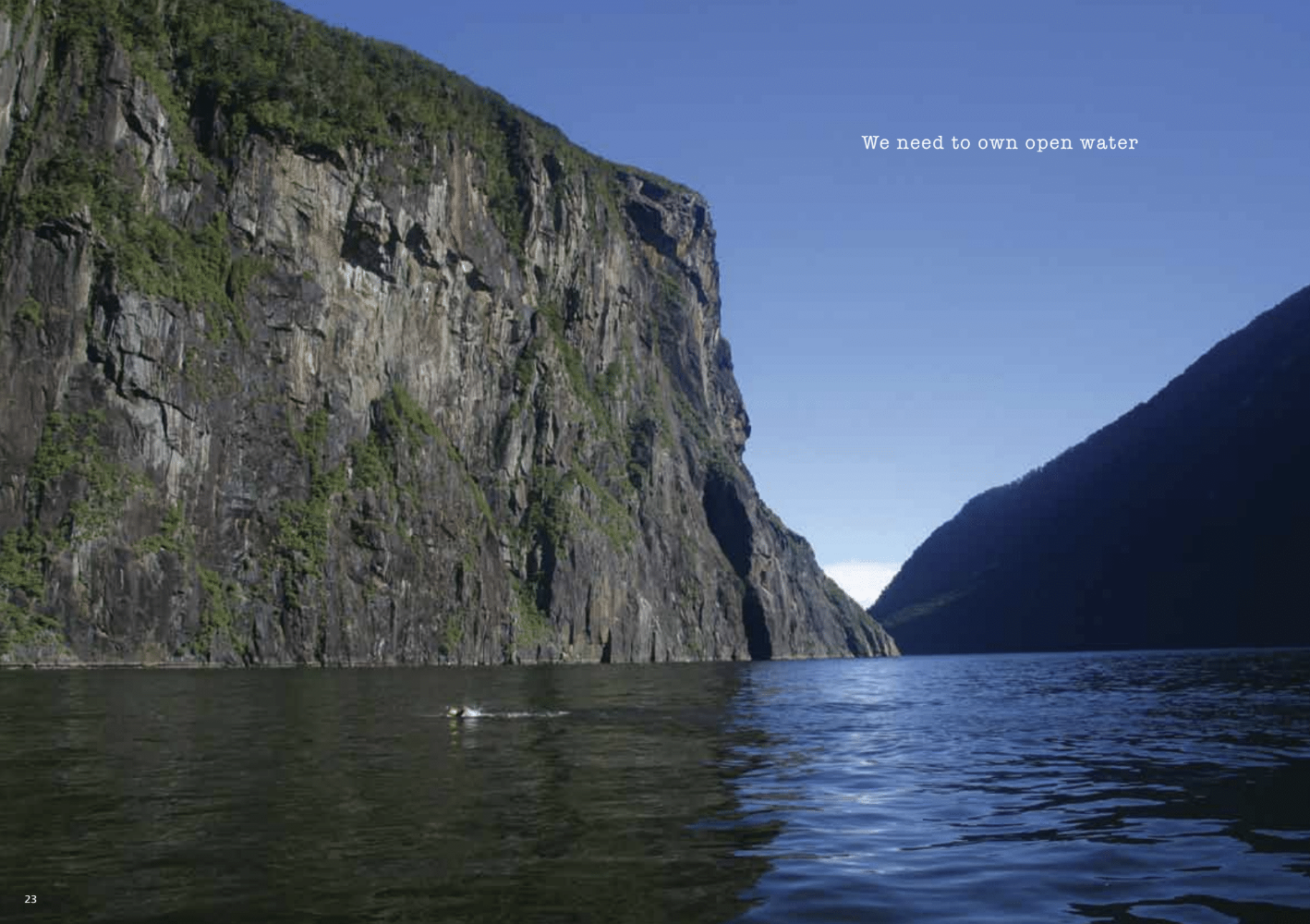
Blueseventy needed to own open water swimming. Geoff Matthews pictured here swimming across Milford Sound to get images for global marketing collateral
Category banned. Brand embedded.
Play to the Whistle
One of the most internationally significant moments of the Expansion Years emerged from competitive sport.
Blueseventy was developing what would become the world’s first high-performance swimming ‘super suit’. Made from rubber, the prevailing assumption across the sport was that it would never be approved.
Geoff and Carryn went straight to the rulebook.
What they saw was not ambiguity, but opportunity. The way the rules read, the technology was specifically allowed. Geoff knew the impact of an official approval would be seismic, not just for Blueseventy, but for the world of competitive swimming itself.
To progress approval, Geoff travelled twice to Lausanne to meet directly with the sport’s governing body, while Carryn prepared the technical submission from Queenstown. In their first meeting, Geoff told the Executive Director plainly: if these suits, or competitors’ versions of them were approved, they would break every world record.
The response was dismissive. “Something that weighs the same as a woman’s underwear cannot aid a ninety-kilogram man”, he was told.
Geoff smiled back and assured the Executive Director that every world record would fall.
The suits were approved. Keeping true to brand, Blueseventy became the official FINA Open Water World Cup sponsor.
What followed was immediate and unprecedented. Blueseventy’s suit, alongside equivalent competitor models, contributed to more than 360 world records being broken worldwide.
Later, at the Open Water World Championships, the Executive Director approached Geoff and said quietly: “It’s acceptable if the suit makes the athlete feel better. But if it is aiding performance, it will have to be banned”.
A ban was never the concern. Blueseventy’s objective was not to own the rulebook indefinitely, but to establish a triathlon-born brand inside a swimming world dominated by global giants.
In the nine months the suits were legal, Blueseventy sold more than 40,000 suits globally, achieving instant commercial scale and global recognition. By the time the category was later banned, the brand was already embedded in the sport: every competitive swimmer in the world knew the name Blueseventy, and a Blueseventy athlete had won Olympic gold in the 10-kilometre open-water event at the Beijing Games. Mission accomplished.
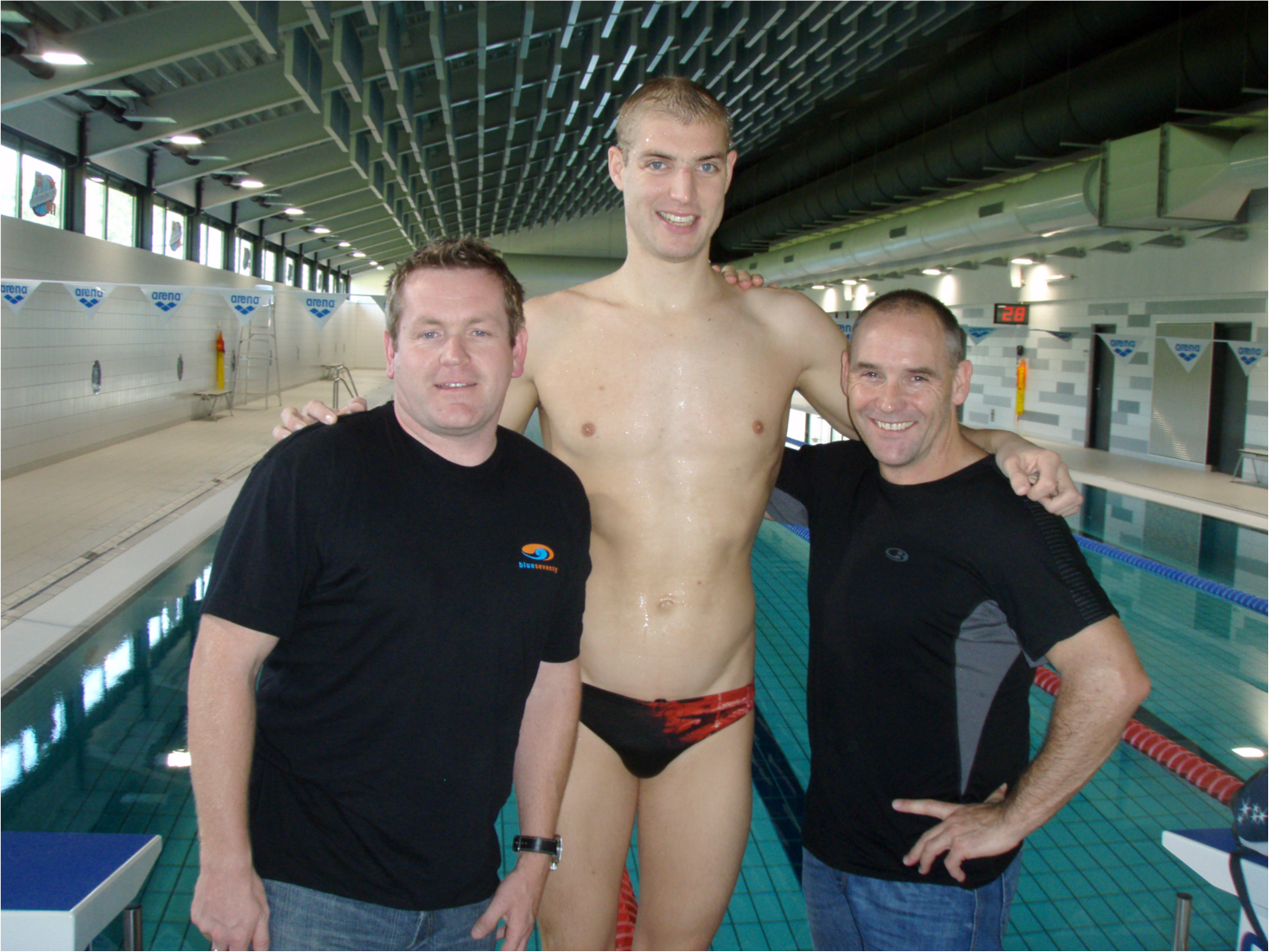
Martin Van Weijen Olympic Gold medalist and World Open Water Champion, towers over Geoff Matthews (right), yes he is that tall and no he's not standing on anything. Pictured here in Holland 2008.
Information memoranda as complete commercial storytelling narratives
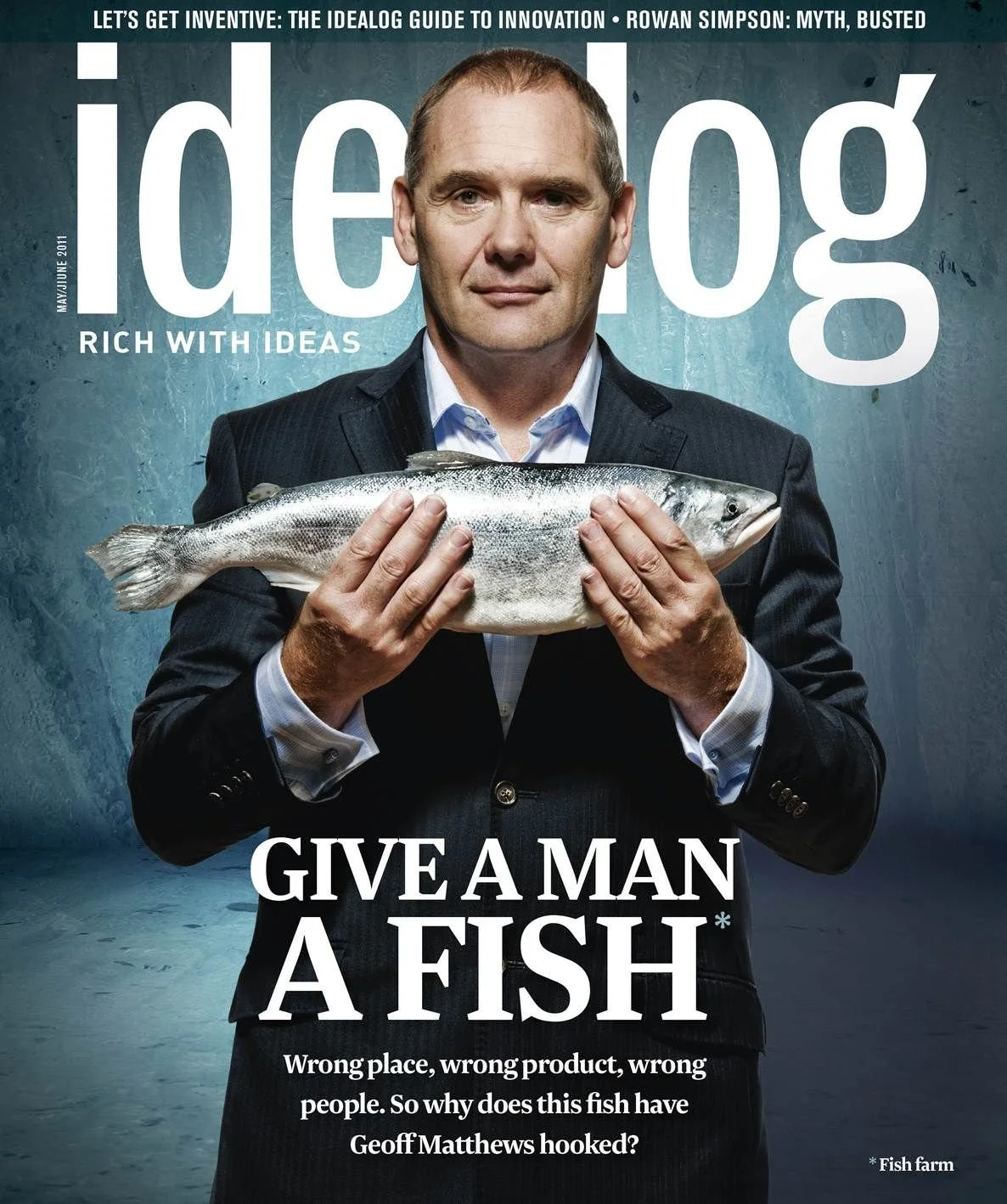
Investor-Grade Brand Thinking: Mt Cook Alpine Salmon
By 2010, BrandCom was working in a space no other branding or marketing practice in New Zealand occupied, producing Information Memoranda, financial documents that are normally the exclusive domain of large accounting firms and stockbrokers. BrandCom was increasingly engaged to write them as complete commercial story-telling narratives, capturing the people, the proposition, and the market opportunity behind the numbers. That work set BrandCom apart and led directly to some of its most consequential engagements.
Mt Cook Alpine Salmon took this work further, into formation level, and involved shaping vision, structure, capital strategy, and investor narrative simultaneously.
The company was formed by Geoff, while BrandCom authored the original Information Memorandum and shaped the commercial and brand architecture of the business. Geoff personally led investor engagement and capital raising. Approximately $30 million was raised, establishing the foundation for what would become one of New Zealand’s most successful premium food companies.
From the outset, Mt Cook Alpine Salmon was conceived as an eco-sustainable brand (the language of the time), but a rigorous proposition, nonetheless. Its sustainability credentials were unmatched by any salmon farm in the world, encompassing pristine water sources, low-density farming, and an uncompromising approach to quality and environmental stewardship. Sustainability sat at the core of the proposition and became the foundation of its premium value.
Geoff went on to act as Chief Executive, guiding the company through its formative growth phase. Under his leadership, Mt Cook Alpine Salmon achieved Deloitte Fast 50 recognition and went on to win six New Zealand Food Awards, including the Supreme Award.
That sustainability-led proposition was validated at the highest level. Mt Cook Alpine Salmon was taken into some of the world’s most exclusive kitchens, including The French Laundry in California’s Napa Valley — a benchmark few food brands ever reach.
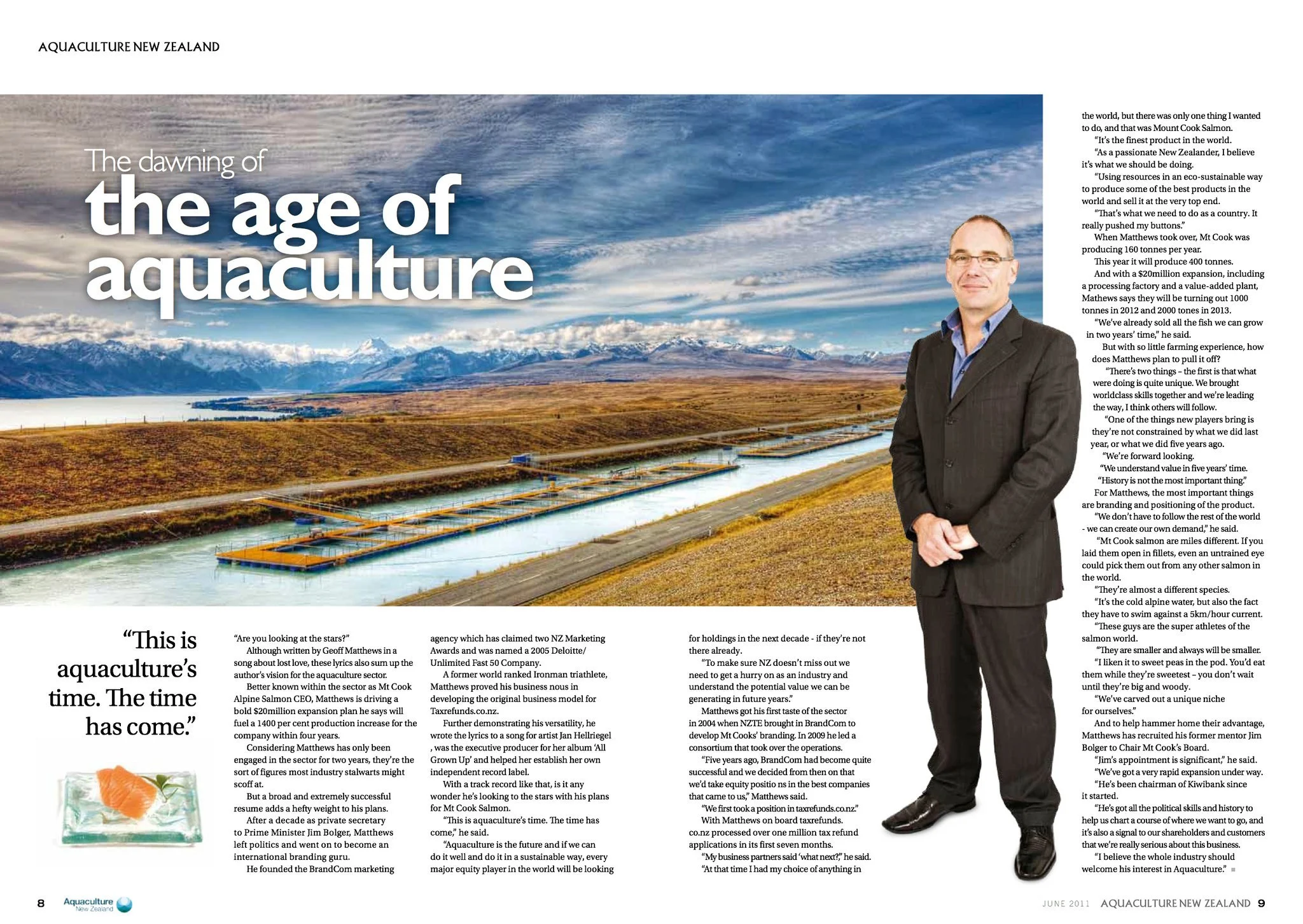
Strategic storytelling is a creative art
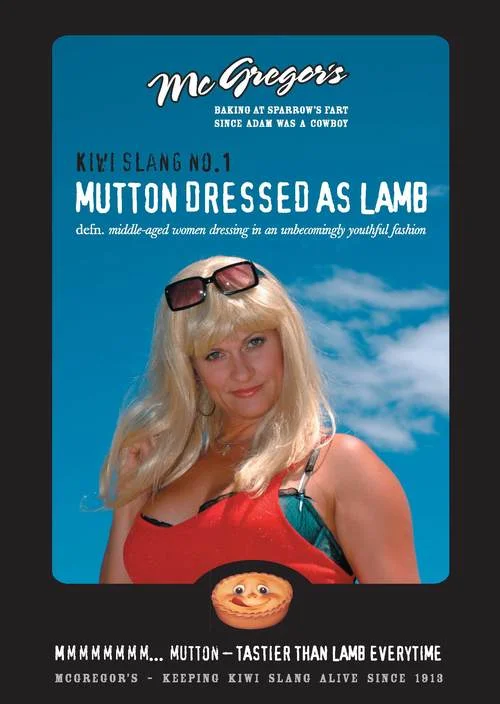
Language and Culture
At its heart, BrandCom was a storytelling business. Language mattered. Tone mattered. Cultural truth mattered, and both stories below still endure over 20 years later and still make people smile.
MacGregor’s Pies
In Otago, BrandCom was entrusted with refreshing MacGregor’s Pies, a long-established regional brand. By that stage, Geoff Matthews and Carryn Colton were finishing each other’s sentences. The main tagline, “Baking at sparrow’s fart since Adam was a cowboy,” was the two of them ‘at play’ and looking for the compelling truth. The line set the tone for the entire brand.
Kiwi slang became a deliberate language system across packaging, advertising, and digital channels. Even the website invited the public to submit and vote on their favourite pieces of Kiwi slang. It captured local vernacular and confidence and remains in use today.
The Clutha District
The Clutha District regional brand required the same truth-seeking discipline as well as a local cultural understanding. Geoff repeatedly pressed Carryn, who grew up in Lawrence, with the same question; “why is living in Clutha so good”?
Eventually a frustrated Carryn fired back, “at least everyone says hello.”
This insight and moment of truth became the tagline:
“Where everyone says hello”.
More than twenty years later the tagline with its distinctive design remains in use.
Translating complex technology into commercial reality
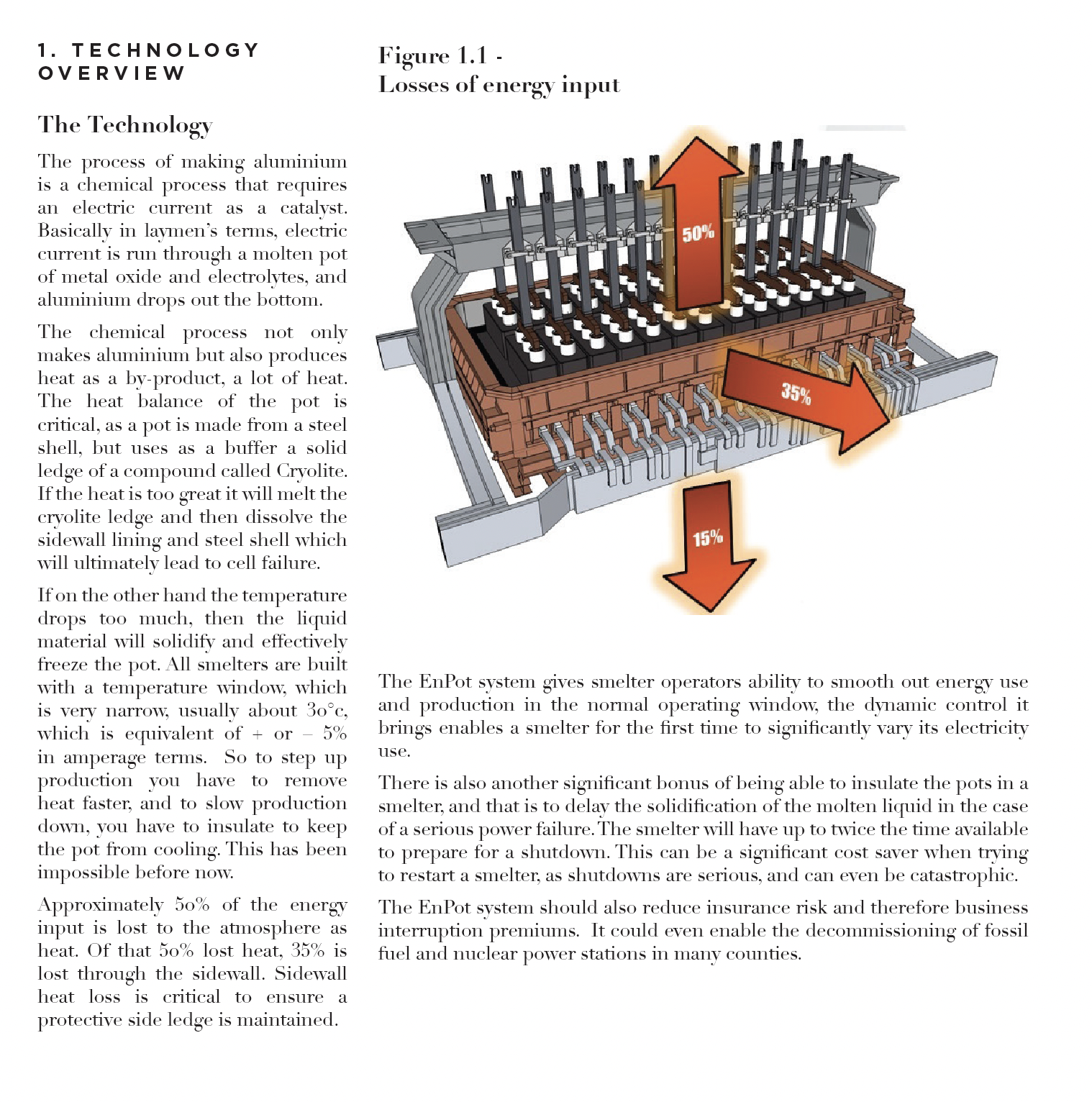
Complexity and a Changing World
By 2015, BrandCom had a proven ability to translate complex technology into commercial reality, alongside an earned understanding of how sustainability pressures were already forcing systemic change.
Geoff was invited to view a new energy-modulation technology developed at the Light Metals Research Centre at the University of Auckland, designed to smooth and modulate electricity demand of aluminium smelters.
Geoff remembers thinking at the time: “If they get this to work, it could change the world of aluminium smelting.”
BrandCom was engaged to create the EnPot brand and develop a comprehensive business plan to commercialise the technology. The work extended well beyond brand expression. It required deep engagement with both the aluminium smelting process and the technology itself, as well as market structure, system integration, commercial logic, and long-term positioning within evolving electricity grids.
At its core, the work demanded a rigorous understanding of the intersection between industrial production, energy markets, and climate change — and a growing recognition that decarbonising heavy industry would be central to any credible energy transition.
The builders were needed inside what they built
Expansion Reconfigured
For a decade, BrandCom had bent the Ansoff rules. By 2016, the BrandCom tree had borne fruit, giving rise to new ventures and becoming one of the most compelling senior talent pools for the very organisations it helped bring to life.
Gemma Boyle went on to become Chief Executive of Iconic Adventures (Motatapu). Tracey Neil became Chief Executive of Redwitch Analog Pedals.
Rosie Turner went to become Marketing Manager for Hilton Hotels, Lisandra Macaés returned to Europe to continue her international commercial career, and Carryn Colton turned her focus to raising two young children before joining the New Zealand Hydrogen Council in 2022. At the same time, Geoff moved into the role of Vice President of EnPot.
BrandCom paused taking on new clients, but the intellectual and capability expansion of the now-dispersed BrandCom team never stopped.
A fresh perspective on how the transition to zero-carbon was unfolding
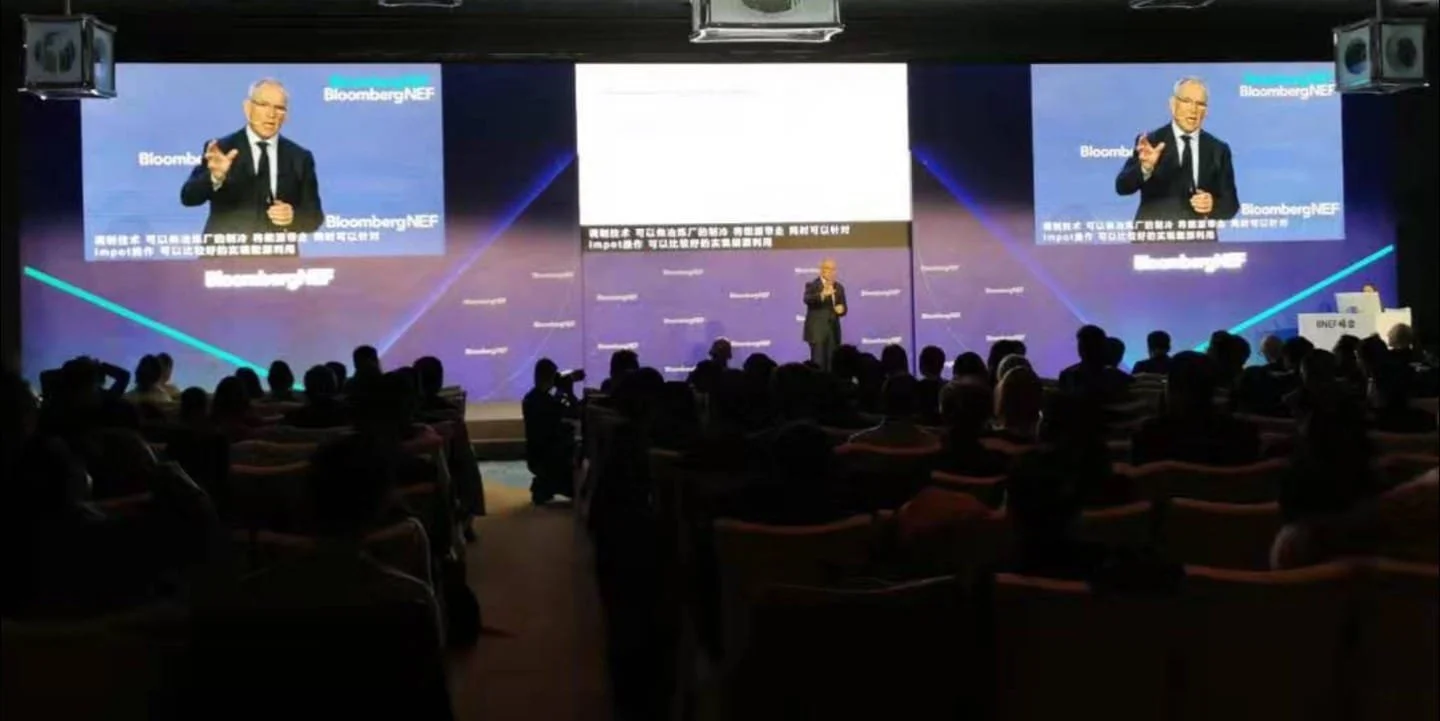
Geoff was the first New Zealander to be invited to speak at a Bloomberg New Energy Finance Summit, Shanghai 2019
Sleepwalking to 2050 is as bad as predatory delay
Global Immersion
Geoff became increasingly active on the global stage and spent half his time overseas. He visited aluminium smelters across the globe, met with global institutions like the IEA, Bloomberg New Energy Finance, the European Reconstruction Fund, and co-authored numerous articles for academic journal and mainstream publications, as well as presenting at a large number of international conferences and forums.
He co-authored the first Pathway to Zero Carbon 2050 for primary aluminium production and was acknowledged as a “global thought-leader” by Aluminium International Today.
However, by the end of the decade, global conditions had shifted dramatically. COVID-19 and the Russian invasion of Ukraine disrupted industrial operations and supply chains worldwide. The appetite for new technology in legacy aluminium smelters evaporated almost overnight.
With international travel halted, Geoff was back in New Zealand, drawing on four years of traversing the globe and a fresh perspective on how the transition to zero-carbon was unfolding.
A troubling pattern had become clear. Technologies capable of materially reducing emissions already existed, yet uptake remained slow or non-existent. At the same time people were willing to debate endlessly how difficult the transition was going to be, instead of getting on with the job. As the keynote speaker at an international aluminium conference in Shanghai in 2023 Geoff described this phenomenon as, “at best its sleepwalking to 2050 and at worst its predatory delay.”
Connecting the people who want to do something, with the something
Conversations from the Edge becomes a strategic storytelling platform
Connecting the dots
Geoff thought that if he could connect the people who wanted to act, with the solutions that already existed, that would help make a start.
Between 2022 and 2025, SIM-PAC Live was built as an ecosystem: Conferences, long-form interviews, awards, and digital content were designed as interconnected elements of a single platform, each reinforcing the others.
Australia became a focal market due to its rapid adoption of variable renewable energy and its scale as an industrial economy. SIM-PAC Live evolved into a national platform with a commercial membership base of over 70 members, supporting collaboration, visibility, and shared learning across the sector.
The long-form interview series Conversations from the Edge allowed Geoff to have his own storytelling platform. It became a cornerstone of SIM-PAC Live with more than one hundred interviews published, documenting the full industrial sustainability supply chain from mineral extraction through to composting.
Throughout this period, BrandCom’s creative lineage remained present. With long-time collaborator Jos Browning doing all design and Geoff regularly checked in with Carryn Colton for strategic perspective.
BrandCom returns to its roots … a strategic branding and marketing consultancy
Sustainability, decarbonisation, and circularity becomes the work that will define the next 25 years
Living and Evolving
Geoff and Carryn have always recognised that even though BrandCom stopped taking on new clients, it continued through the people, projects, and platforms it helped create.
At the end of 2025, they agreed it was time to begin taking on new clients again, returning to its roots as a strategic branding and marketing consultancy.
What defined BrandCom over its first 25 years remains. In 2026, it is matched by serious depth and proven capability in sustainability, decarbonisation, and circularity; work that will define the next 25 years.
BrandCom has endured a quarter of a century because it was built to evolve. Its philosophy has remained intact because it was never designed to stand still.
This is BrandCom.
Our work is diverse
Our skill base is extensive
We don’t limit ourselves to what we have done in the past
We think strategically before we act creatively
We tailor solutions to our clients’ needs
The results speak for themselves.